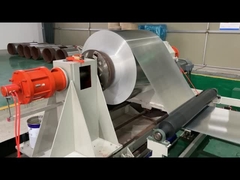
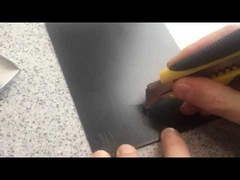
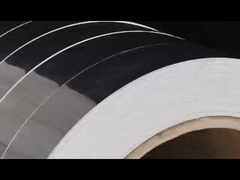
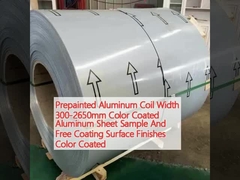
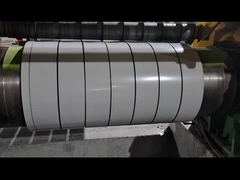
Brief: In this video, we explore the 30-year durability and aesthetic appeal of our Aluminum Alloy 3003 sheets for indoor ceilings. You'll see how this lightweight material, with its customizable RAL coating, offers superior formability and a long-lasting, color-stable finish for modern suspended ceiling systems.
Related Product Features:
Features a durable 3003-H24 aluminum alloy that is 20% stronger than 1100 series with excellent formability and flatness.
Includes a double-baked RAL polyester coating that resists UV aging and comes with a 30-year no-yellowing warranty.
Available in custom widths from 600mm to 1500mm and thicknesses from 0.6mm to 0.9mm for versatile ceiling applications.
Offers a lightweight solution, weighing 80% less than steel, making installation easier and faster.
Supports various installation systems including C-grid, T-grid, hook-on, and lay-in for flexible design options.
Provides a Class A fire rating (EN 13501-1 B-s1,d0) ensuring safety in commercial and public spaces.
Eco-friendly with 96% lower CO₂ emissions compared to gypsum or PVC materials.
Can be perforated and combined with acoustic fleece for enhanced sound absorption, achieving NRC up to 0.90.
FAQs:
What is the warranty on the color stability of the RAL-coated aluminum sheet?
The product comes with a 30-year no-yellowing warranty, backed by 1000 hours of UV aging testing to ensure the color remains pure and stable.
How does the weight of this aluminum sheet compare to steel?
This aluminum sheet is 80% lighter than steel, with a 0.8mm aluminum sheet weighing approximately 2.5 kg/m² compared to 12 kg/m² for steel of the same thickness.
What installation systems are compatible with this aluminum ceiling sheet?
It is compatible with various systems including C-grid, T-grid, hook-on, and lay-in, allowing for 70% faster installation without the need for wet trades.
Is this material suitable for acoustic applications?
Yes, when perforated and combined with acoustic fleece, it can achieve a Noise Reduction Coefficient (NRC) of up to 0.90, making it ideal for environments requiring sound control.